Flatbed Towing vs Wheel Lift: Pick Smart
Choosing the right towing method depends on the vehicle type, the distance of the trip, and the car's physical location. For long distances or vehicles equipped with All-Wheel Drive (AWD) and Four-Wheel Drive (4WD), a flatbed truck is the safest option because it keeps all wheels off the ground, preventing potential transmission damage. Conversely, wheel lift towing is better suited for short distances, tight urban spaces like parking garages, or scenarios where a vehicle is stuck in a position inaccessible to a large flatbed.
Deciding between these two methods affects both the safety of the vehicle and the total cost of the service. While many people assume any tow truck can handle any job, using inappropriate equipment can lead to expensive repairs. Ocean Towing provides this breakdown to help drivers make informed choices based on industry standards and mechanical requirements. This guide draws from practical field experience and technical data to clarify which method fits specific recovery needs.
Mechanics of Flatbed Towing
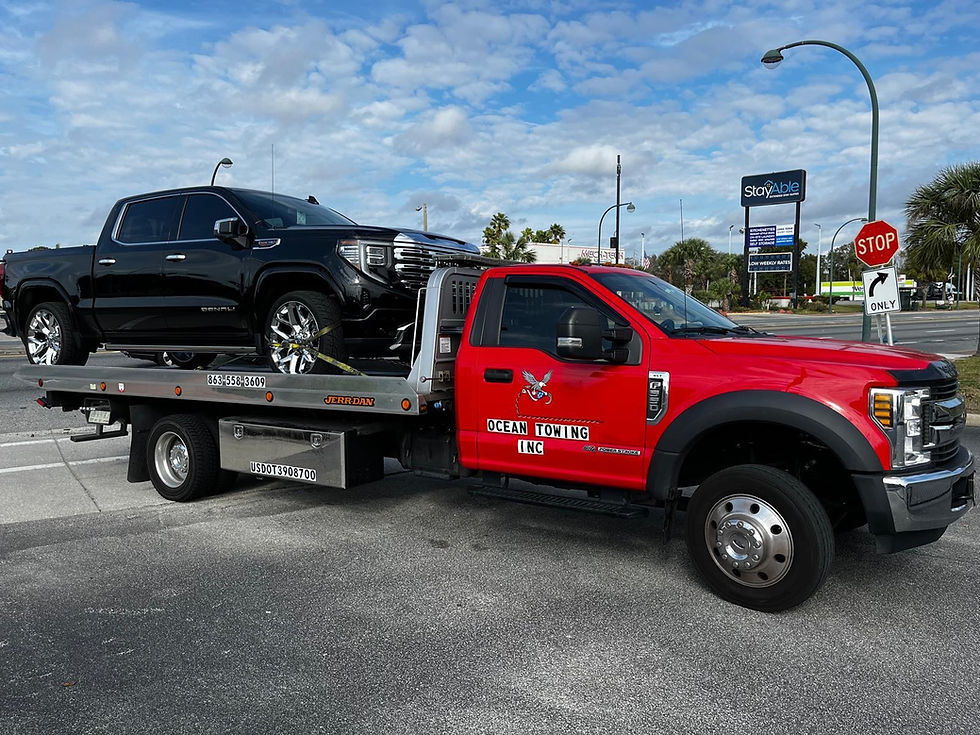
A flatbed truck features a large, empty bed that can be hydraulically tilted and lowered to the ground. This allows the vehicle to be driven or winched directly onto the platform. Once the car is in place, the operator secures it using heavy-duty straps or chains attached to the frame or tires. Because the vehicle remains stationary on the bed, there is no wear on the tires, bearings, or transmission during transport.
Statistics from MarketWatch indicate that the demand for flatbed services has grown as vehicle designs become increasingly complex. Many modern cars feature low ground clearance or plastic body kits that are easily damaged by traditional towing methods. A flatbed removes the risk of the car striking bumps or debris on the road.

Benefits for Luxury and Low Clearance Vehicles
Sports cars and luxury sedans often sit just inches above the pavement. Lifting only two wheels can cause bumpers or exhaust systems to scrape against the ground. Flatbed trucks provide a level surface that eliminates this risk. This method is also preferred for vehicles with significant mechanical damage or those involved in accidents where the wheels no longer turn freely.
Bonus Tip: When requesting a flatbed for a low-profile car, ask if the truck uses race ramps or wood blocks to further decrease the loading angle. This extra step prevents front-end damage during the initial pull onto the bed.
Mechanics of Wheel Lift Towing
Wheel lift towing evolved from the older hook-and-chain method. Instead of chains that can scratch paint or bend frames, this system uses a metal yoke. The yoke fits securely under the front or rear tires of the vehicle. A hydraulic lift then raises one end of the car off the ground, leaving the other two wheels to roll on the pavement.
This method is highly effective for quick removals and short-distance transport. According to a report by IBISWorld, wheel lift trucks are essential for urban towing companies because they are smaller and more maneuverable than flatbeds. They can fit into narrow alleys and low-clearance parking structures where a flatbed simply cannot operate.
Efficiency in Urban Environments
Wheel lift trucks are faster to deploy. If a car is parked on a crowded city street, a wheel lift operator can often secure the vehicle and move it out of traffic much faster than a flatbed operator could. This speed is vital for clearing road hazards and minimizing traffic congestion.
Bonus Tip: If a vehicle is in a front-wheel-drive configuration and the front wheels are accessible, wheel lift towing is perfectly safe for short trips to a local repair shop.
Comparing the Two Methods
The following table provides a direct comparison between these two common towing options. Evaluating these technical distinctions ensures that the selected service aligns with the vehicle's mechanical needs.
Feature | Flatbed Towing | Wheel Lift Towing |
Drivetrain Safety | Safe for AWD, 4WD, and RWD | Best for 2WD (FWD or RWD) |
Distance | Ideal for long-distance transport | Best for short, local trips |
Maneuverability | Requires significant space | Fits in tight spots and garages |
Loading Speed | Slower (requires winching/securing) | Faster (quick yoke attachment) |
Risk of Wear | Zero tire or transmission wear | Moderate wear on trailing tires |
Vehicle Condition | Good for totaled or immobile cars | Requires at least two rolling wheels |
Protecting the Transmission and Drivetrain
The most significant risk in towing is transmission damage. If an AWD vehicle is towed with two wheels on the ground, the internal components of the transmission and the center differential can overheat and fail. This happens because the wheels on the ground turn the driveshaft while the wheels in the air remain stationary, creating extreme friction.
Research published by AAA emphasizes that owners should always check their vehicle manuals for specific towing instructions. This is especially true for AWD systems and modern electric vehicles, which often require flatbed transport to maintain drivetrain integrity. If a wheel lift must be used on an AWD car, the operator must utilize tow dollies. These are small sets of wheels placed under the rolling tires to ensure no part of the vehicle's drivetrain moves while in transit.
Things to Consider Before Making a Decision
Before calling for assistance, evaluate the following factors to ensure the correct truck is dispatched to your location.
The Drive System: Is the car Front-Wheel Drive, Rear-Wheel Drive, or All-Wheel Drive? This is the most critical information for the dispatcher.
Vehicle Location: Is the car in an open parking lot, on the side of a highway, or tucked away on the fourth floor of a parking garage?
Condition of the Wheels: Do all four tires hold air, and do the axles move? If the wheels are locked or the tires are shredded, a flatbed is usually necessary.
The Destination: How far does the car need to go? If the trip exceeds 15 or 20 miles, the stability of a flatbed is worth the potential extra cost.
Ground Clearance: Does the car have aftermarket side skirts or a very low front bumper?
Common Questions about Towing Methods
Beyond mechanical requirements, several standard operational questions often arise regarding the logistics of each method.
Can a wheel lift truck tow a heavy SUV?
Yes, many wheel lift trucks are designed to handle heavy loads, but the weight rating of the specific truck is the deciding factor. For larger SUVs, a flatbed is often preferred to distribute the weight more evenly across the truck's axles.
Is flatbed towing more expensive?
Generally, flatbed towing has a higher base rate than wheel lift towing due to the higher equipment costs and the extra time required to secure the vehicle properly. However, this cost is often lower than the price of a ruined transmission.
What happens if my car is in a tight garage?
Ocean Towing often utilizes wheel lift trucks for these scenarios. A flatbed truck is typically too tall to enter a parking garage and too long to navigate the sharp turns required to reach a stalled vehicle.
Frequently Asked Questions
In addition to standard logistics, certain vehicle types and technical situations require more specialized considerations.
Which method is better for an electric vehicle?
Most electric vehicles (EVs) should be towed on a flatbed. Many EVs do not have a true neutral gear that completely disconnects the motors from the wheels. Towing them with wheels on the ground can generate electricity in the motors, leading to significant electrical system damage or fire risks.
Can a wheel lift tow a car with no keys?
It is possible, but difficult. If the car is in park and the wheels are locked, dragging it onto a wheel lift can damage the tires and the parking pawl in the transmission. If keys are unavailable, a flatbed with "skates" (plastic blocks placed under the tires) is a safer way to move the vehicle.
Does towing affect my car's mileage?
If the vehicle is on a flatbed, the odometer will not change. In older vehicles with mechanical odometers, towing with wheels on the ground could increase the mileage; however, modern digital odometers do not record distance unless the ignition is on and the vehicle's sensors are active.
How do I know if the tow operator is using the right equipment?
A professional operator will ask about the drivetrain before hooking up the car. If the vehicle is AWD and the operator arrives with a wheel lift but no dollies, it is appropriate to request a flatbed or the use of dollies to protect the transmission.
Summary of Towing Choices
Choosing between flatbed and wheel lift towing requires a balance of mechanical necessity and situational constraints. Flatbeds offer the highest level of safety for the vehicle's mechanical systems, making them the standard for luxury, AWD, and long-distance transport. Wheel lift trucks provide the agility needed for urban recoveries and short-distance moves where speed and space are primary concerns. Drivers should always verify their car's drivetrain and communicate clearly with the service provider to ensure the vehicle reaches its destination without secondary damage. Always prioritize the manufacturer's recommendations found in the owner's manual to maintain the long-term health of the vehicle.
Professional Towing Assistance
Ocean Towing provides reliable vehicle transport and recovery services tailored to the specific needs of each vehicle. For professional assistance or to discuss the best towing method for a specific situation, contact the team at 863-558-3609. Detailed inquiries or requests for documentation can be sent to Oceanfortowing@gmail.com. Whether dealing with a specialized AWD system or a vehicle stuck in a tight parking structure, getting the right equipment to the scene is the first step in a successful recovery.
Sources
AAA - Provides safety guidelines and manufacturer recommendations for vehicle towing and drivetrain protection.
IBISWorld - Offers market research and industry analysis regarding the use of different towing equipment in the United States.
MarketWatch - Provides data on market trends and the increasing demand for specialized transport services like flatbed towing.
Statista - Supplies statistics on the size and growth of the towing services market in the U.S.
NHTSA - The National Highway Traffic Safety Administration sets standards for vehicle transport and road safety equipment.